
Natural Swimming Pools: 10 Common Myths (And the Truth Behind Them)
From mosquitos and murky water to heating, planning permission and maintenance — we separate fact from fiction and explain how modern natural swimming pools really work.
Natural swimming pools are growing rapidly in popularity across the UK — yet despite their rise, they remain widely misunderstood.
We regularly speak to clients who love the idea of swimming in clear, chemical-free water, surrounded by planting and wildlife, but hesitate because of something they’ve heard along the way:
“Won’t it attract mosquitos?”
“Aren’t they freezing?”
“Don’t they go green?”
“You need a huge garden, surely?”
At Ellicar, we’ve been designing and building natural swimming pools and swimming ponds for decades— and many of these concerns are based on outdated information or poorly designed examples.
In this in-depth guide, we’ll tackle the most common myths about natural swimming pools, explain how modern systems really work, and show you real UK projects that prove what’s possible.
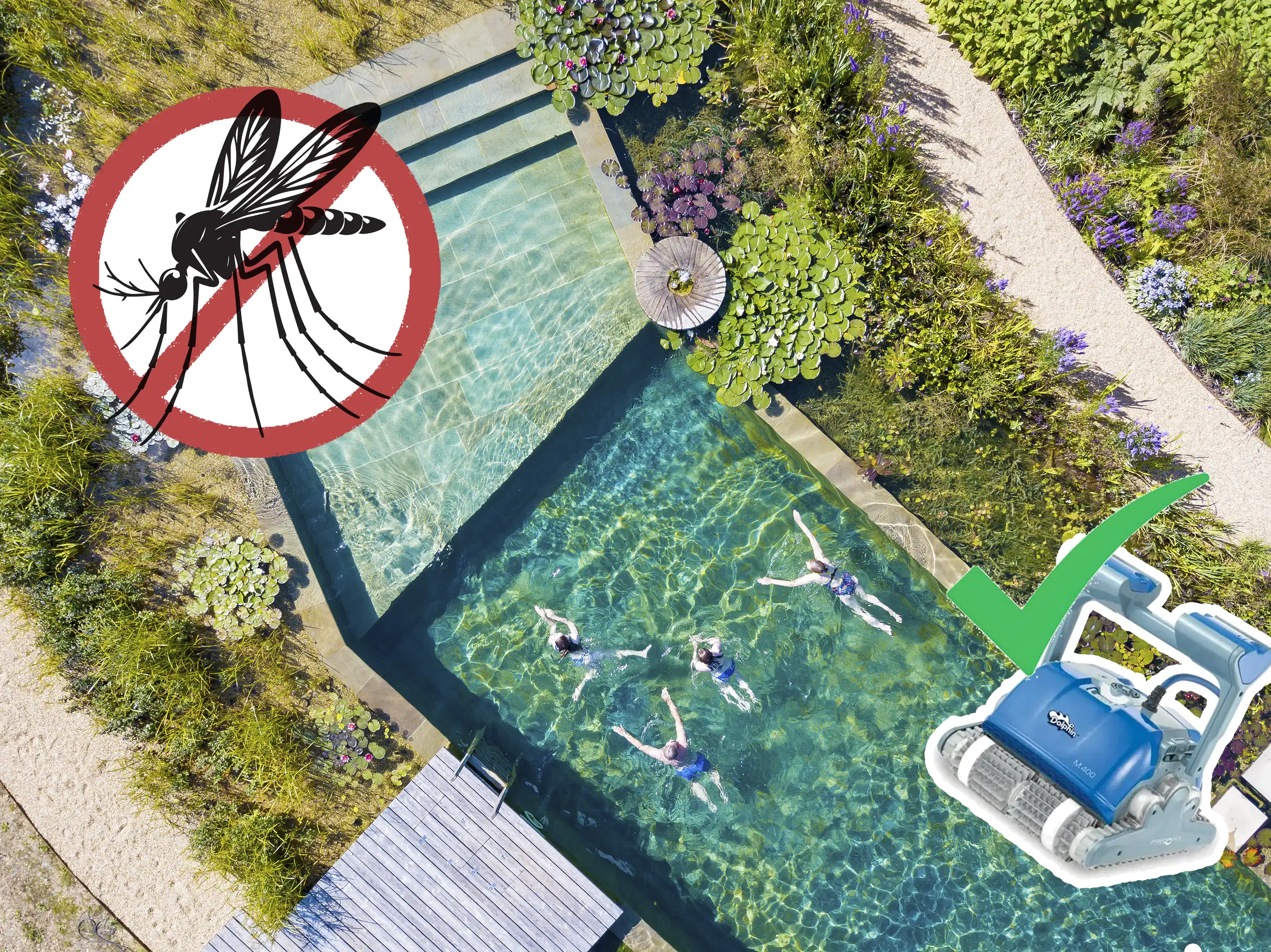
Myth 1: “Mosquitos will breed in a natural swimming pool”
This is one of the most persistent misconceptions — and one of the least accurate.
Mosquitos breed in stagnant water. A properly designed natural swimming pool is anything but stagnant. The water is constantly circulated and filtered, through planted regeneration zones and advanced biological filtration systems.
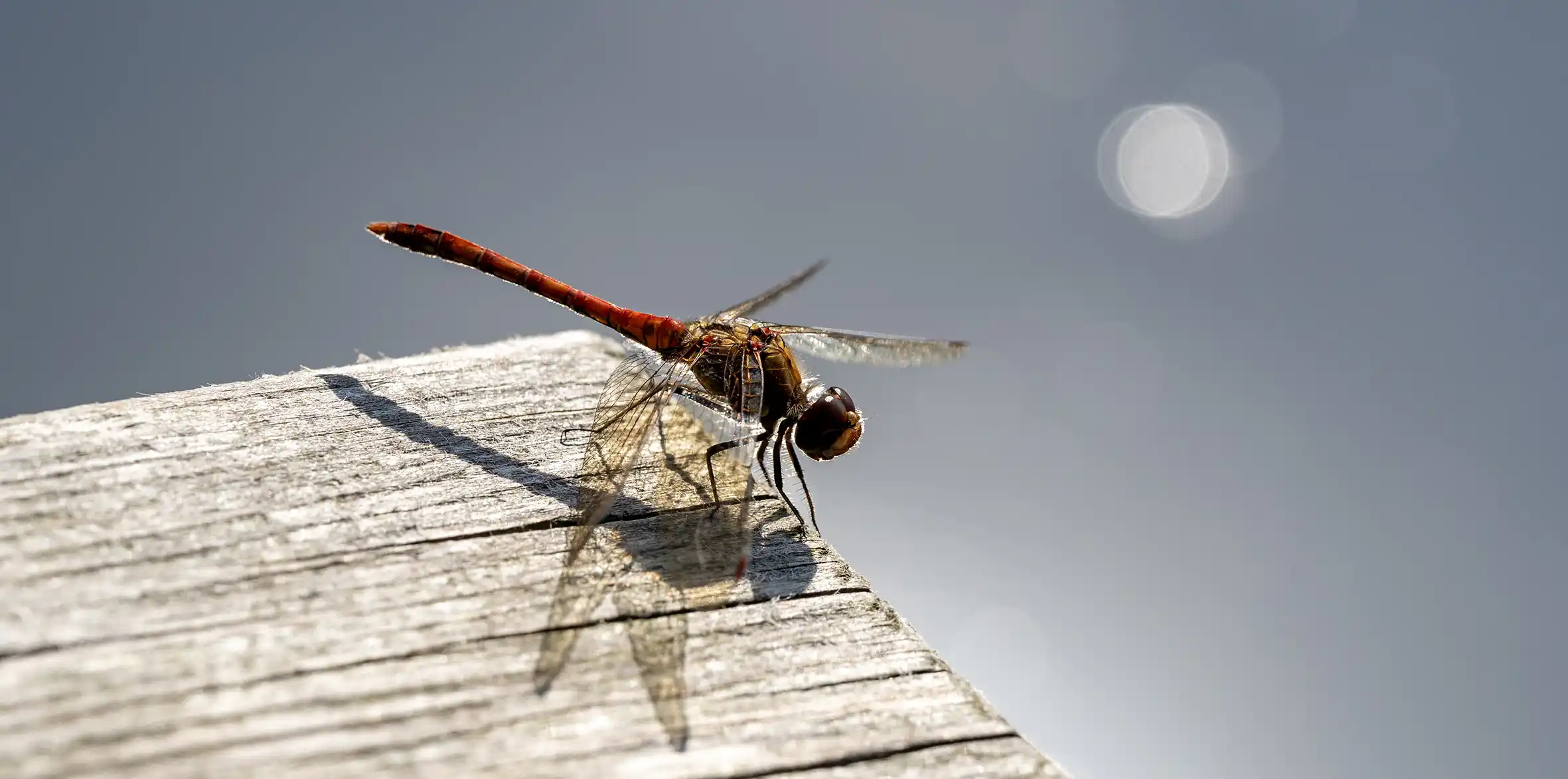
In a healthy natural pool ecosystem, you’ll also find natural mosquito predators such as dragonflies, water beetles and birds. In fact, many clients report fewer mosquitos than before the pool was installed.
Myth 2: “Natural swimming pools are freezing cold”
While natural pools are normally unheated, that doesn’t mean they’re permanently icy. We utilise clever design practises to maximise natural thermal gain, with our pools often reaching the balmy temperature of 26 to 28 degrees Celsius in the Summer.
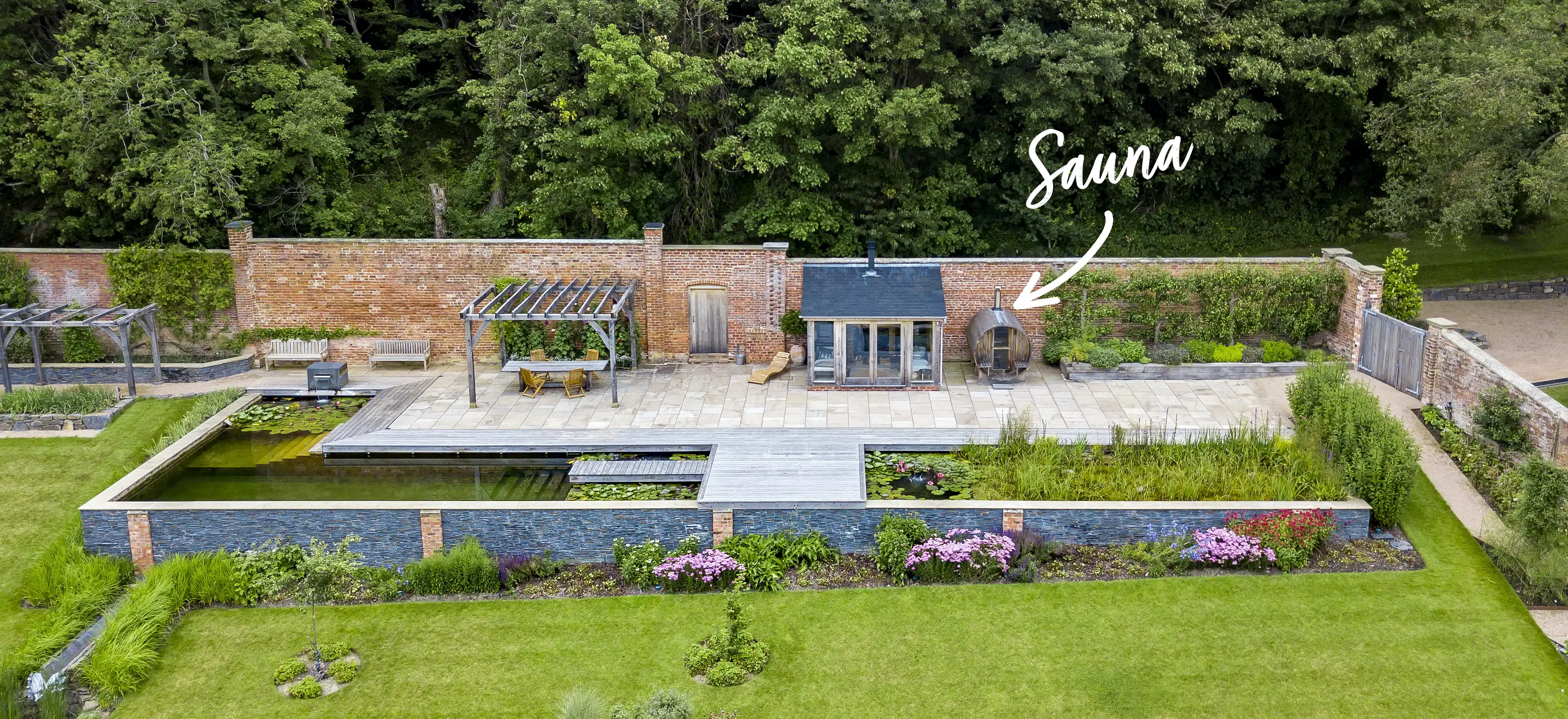
Many clients choose to extend their swimming season by pairing their pool with a sauna or hot tub — turning the space into a year-round wellness retreat.
A great example is our Welshpool natural pool, where a sauna sits directly beside the water. The combination of cold water immersion and heat therapy makes swimming enjoyable even in cooler months, and many clients find they actually swim more often than they did in a conventional pool.
Water temperature is also influenced by:
- Depth
- Orientation
- Shelter from wind
- Darker pool finishes and natural materials that absorb heat
Natural swimming is about embracing seasonal rhythms, not avoiding them — and many people quickly find they love it.
Myth 3: “People only swim in natural pools during summer”
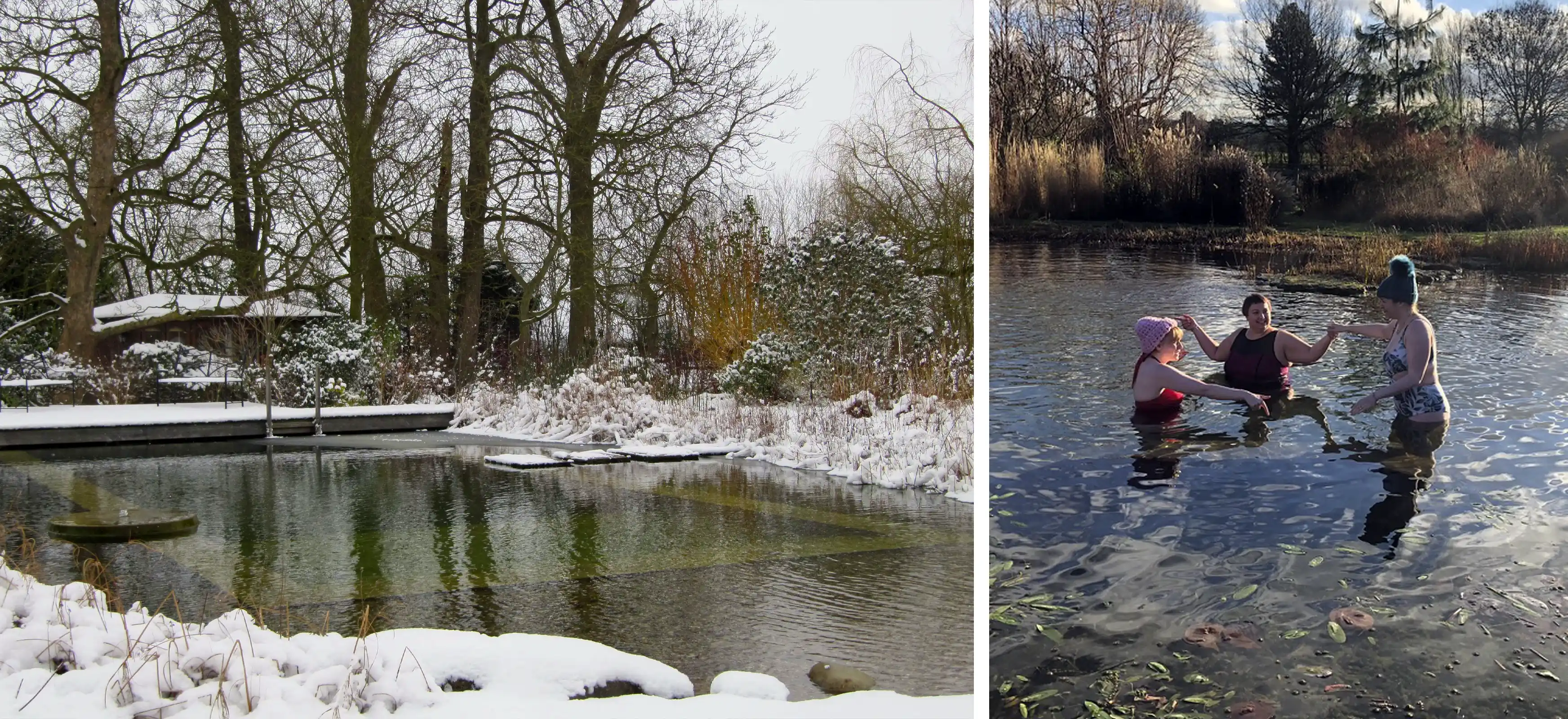
In reality, natural pools are often used far more regularly than traditional pools.
Why? Because they’re not just swimming vessels — they’re living garden features.
Even when not swimming, clients enjoy:
- Sitting beside the water
- Watching wildlife
- Cold-water dipping
- Using adjacent wellness facilities
- Enjoying reflections and planting year-round
Unlike conventional pools, which are often covered or ignored outside summer, natural pools continue to add beauty and value throughout the year.
Myth 4: “You can’t heat a natural swimming pool”
You absolutely can — depending on the system.
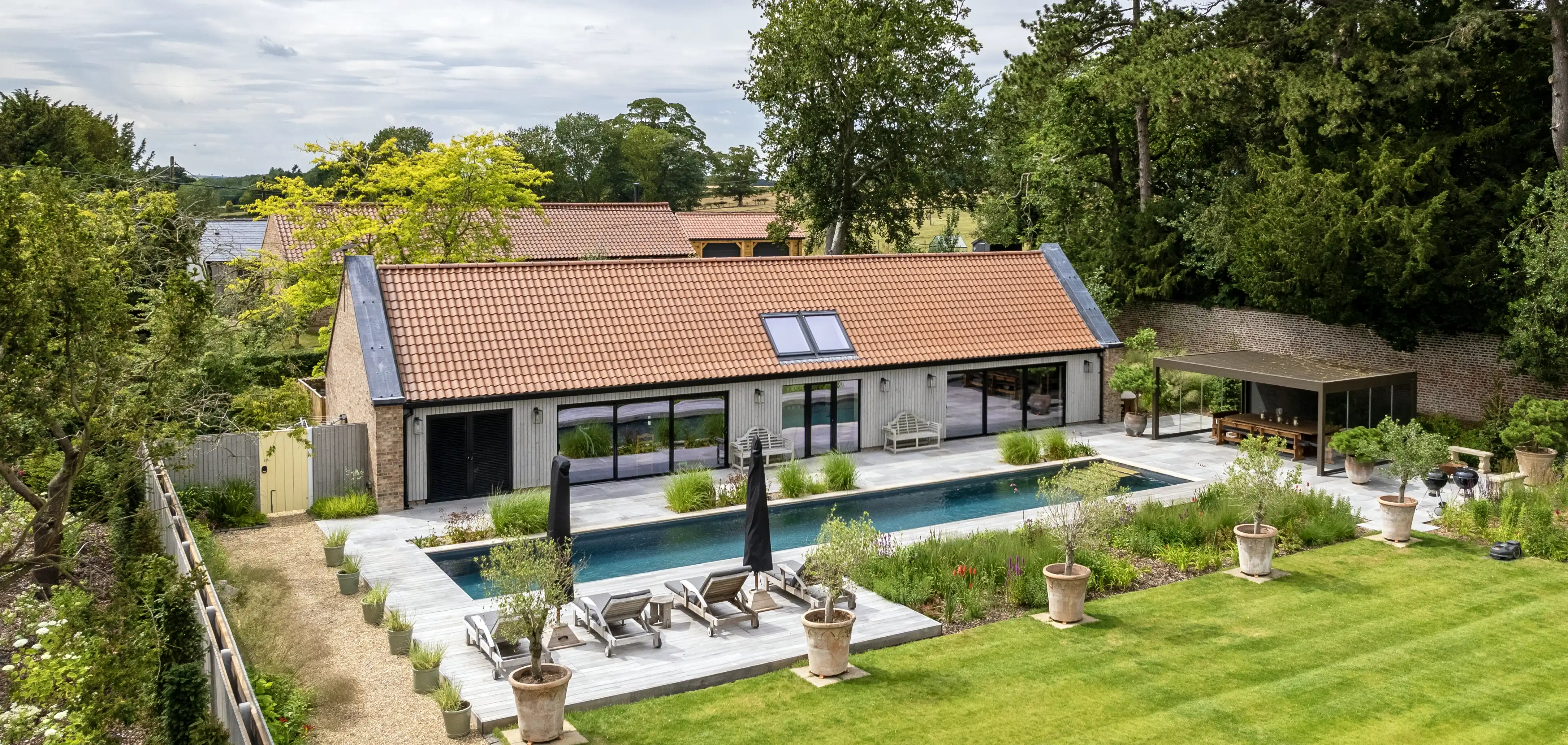
For clients who want warmer water without visible planting, Living Pools are an excellent alternative. These are plant-free natural pools that rely entirely on advanced biological filtration and can be heated up to 28°Cwith an air source heat pump.
At our Yorkshire Living Pool, the result is crystal-clear water with the comfort and usability of a conventional pool — but without chlorine or harsh chemicals.
Myth 5: “The water goes green or murky”
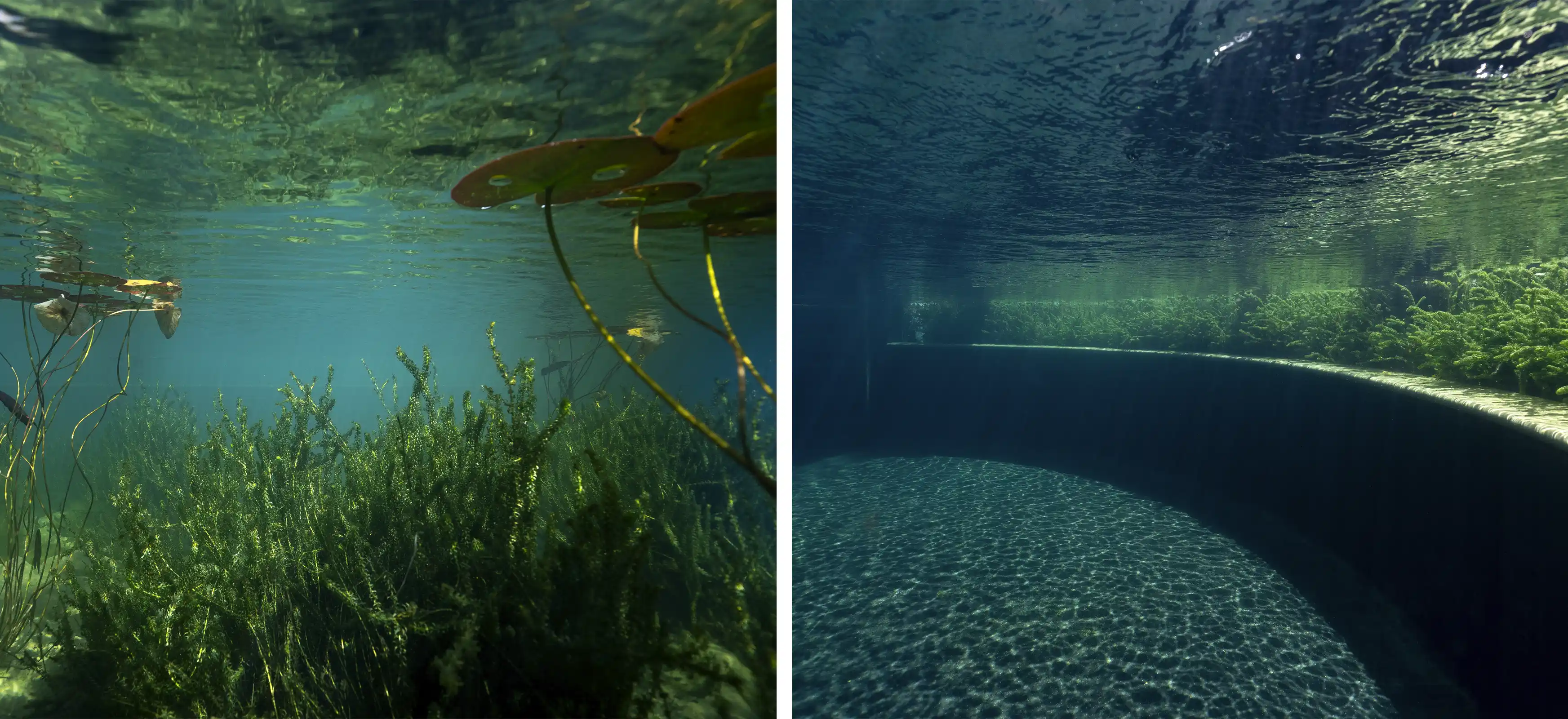
Clear water is not a bonus in a natural pool — it’s the baseline expectation.
Murky or green water occurs when:
- The pool is poorly balanced
- Filtration is insufficient
- Planting is incorrectly specified
- Circulation is inadequate
Our natural swimming pools use advanced biological filtration from market leaders Biotop, supplemented with discreet mechanical systems such as pool skimmers, to maintain excellent clarity.
At Ellicar, we design systems where the main filtration happens out of sight, ensuring:
- Stable water quality
- Minimal algae growth
- Clear swimming zones
- Visually refined planted areas
When designed correctly, natural pools rival — and often exceed — the clarity of traditional pools.
Myth 6: “Natural swimming pools are a lot of work”
Our natural pools are designed for ease of maintenance, not constant hands-on management.
Most of our clients use:
- A pool robot to clean the swimming area
- Automatic filtration systems
- Seasonal checks rather than daily tasks
There’s no chemical balancing, no chlorine handling, and no harsh treatments. Maintenance becomes part of a gentle rhythm, not a chore.
In many cases, clients find natural pools less demanding than traditional ones.
Myth 7: “It’s hard to get planning permission”
While every site is different, natural pools often fare better in planning contexts than conventional pools.
Because they:
- Use natural materials
- Integrate into the landscape
- Avoid chemical storage
- Enhance biodiversity
We’ve successfully secured planning permission in some of the most sensitive locations in the UK.
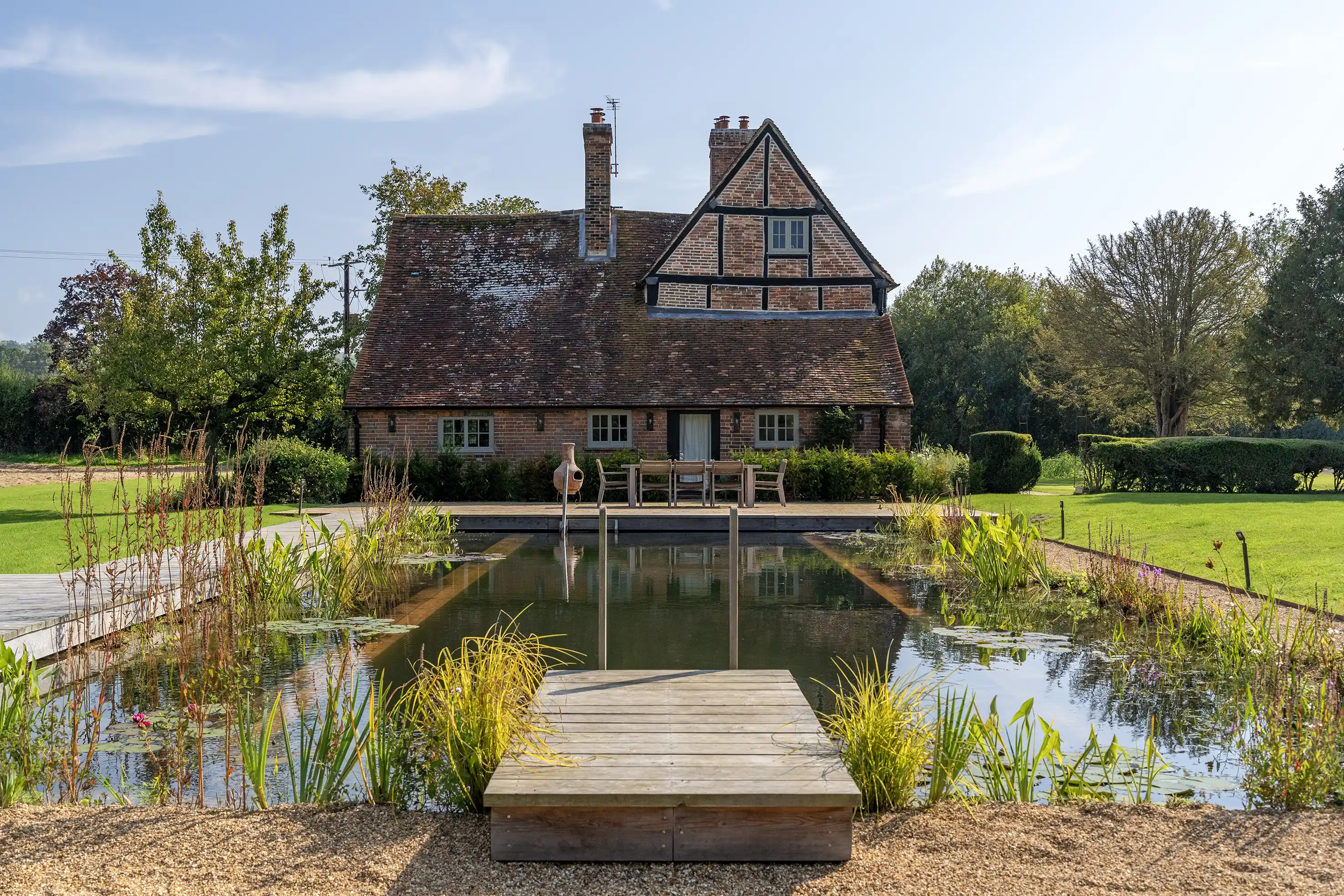
The Kent natural pool is a perfect example — approved within a complex planning context that included conservation considerations and visual sensitivity for this Listed farmhouse.
We regularly work within:
- Conservation Areas
- Areas of Outstanding Natural Beauty (AONBs)
- National Parks
- Listed building settings
Thoughtful design and clear ecological benefits make a real difference.
Myth 8: “You need loads of space”
This is one of the biggest myths — and one we love disproving.
Thanks to compact filtration technology, natural swimming pools no longer require a 50/50 split between swimming and planted zones.
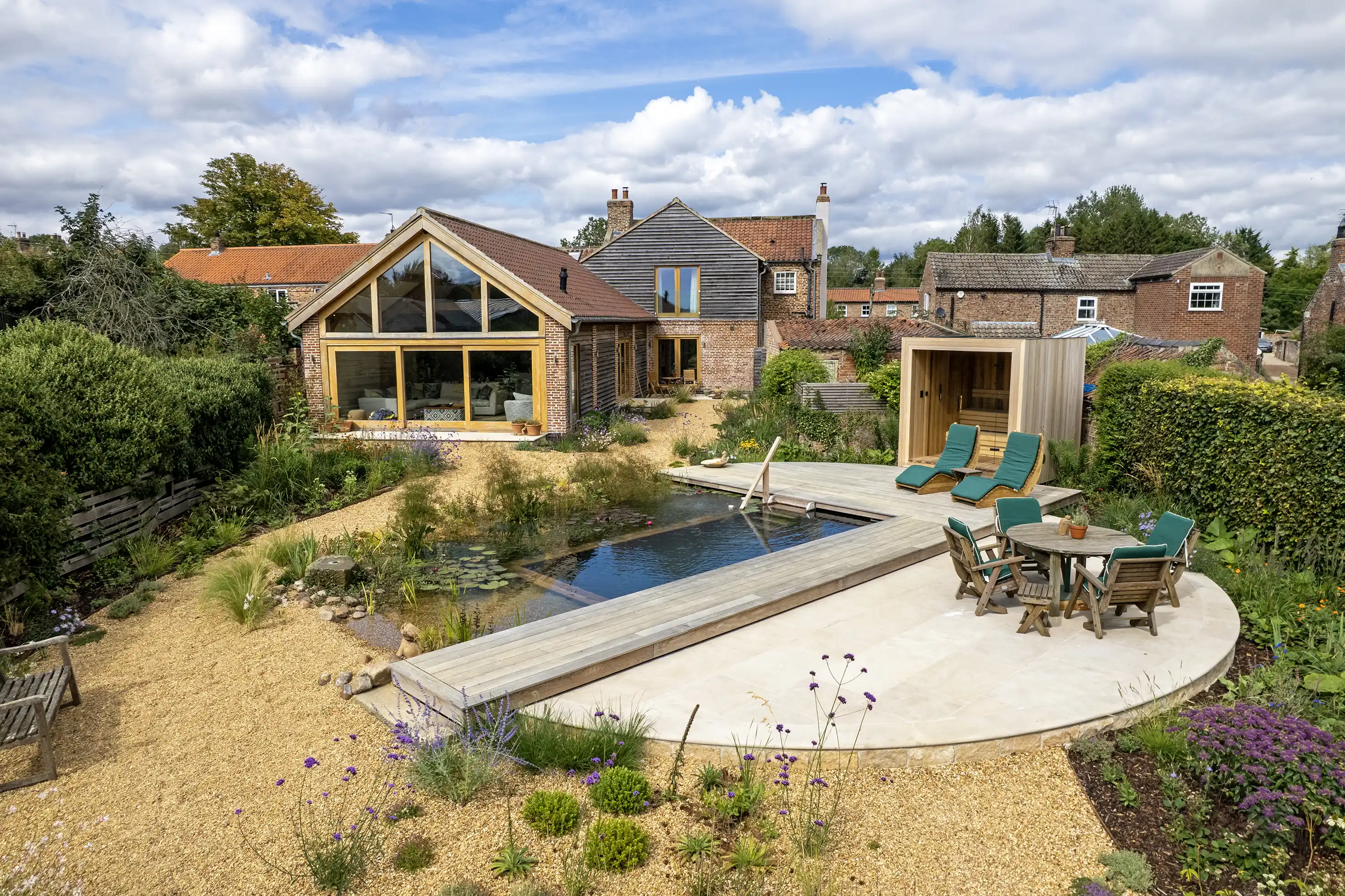
Our Thirsk natural plunge pool is a great example. With a swim zone of just 5m x 2.5m, it sits comfortably within a long, narrow garden — paired with a sauna and surrounded by planting.
By housing filtration discreetly beneath decking, we:
- Maximise swim space
- Minimise visual clutter
- Preserve valuable garden area
Small gardens can be some of the most successful natural pool projects.
Myth 9: “They use loads of power”
In fact, natural swimming pools are typically very energy efficient.
Advanced biological filtration systems use low-energy pumps that often consume around the same power as a household light bulb per day.
Because there’s:
- No chemical dosing
- No energy-hungry backwashing
- No constant heating (unless chosen)
Running costs remain modest — especially compared to traditional heated pools.
Myth 10: “Natural swimming pools don’t age well”
This myth couldn’t be further from the truth.
Unlike conventional pools, which often deteriorate visually over time, natural pools tend to improve with age as planting matures and ecosystems stabilise.
Our Ellicar natural pool, now 16 years old, isa perfect example. It’s clearer, more balanced, and more beautiful than ever —and visitors are welcome to arrange a visit to see how well a natural pool can age when designed properly.
Natural pools are designed to evolve, not degrade.
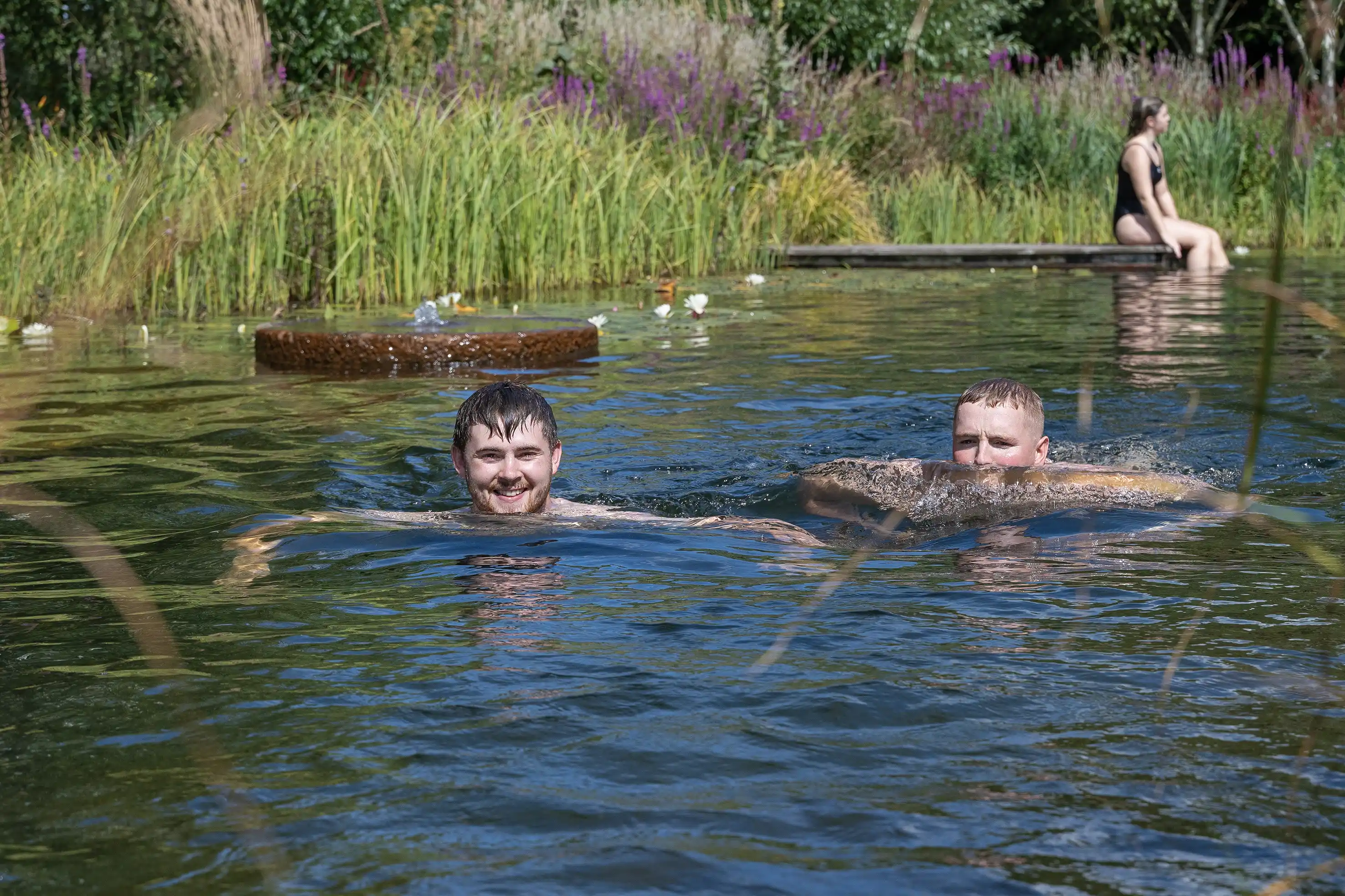
Why Choose a Natural Swimming Pool?
When thoughtfully designed, natural swimming pools offer:
- Chemical-free swimming
- Beautiful integration with gardens
- Biodiversity and wildlife benefits
- Year-round enjoyment
- Lower long-term running costs
- A calmer, more natural swimming experience
They are not a compromise — they’re a different philosophy entirely.
FAQ: Natural Swimming Pools
Do natural swimming pools smell?
No. Properly balanced water is fresh and odourless.
Are natural pools safe for children?
Yes, with thoughtful design and supervision, just like any pool.
Can I have a natural pool without plants?
Yes — Living Pools offer a plant-free alternative.
How long do natural pools last?
With reinforced concrete construction, they are built for decades of use.
Do natural swimming pools add value to a property?
Well-designed pools integrated into gardens often significantly enhance appeal and value.
Thinking About a Natural Swimming Pool?
If you’re curious about what a natural swimming pool or swimming pond could look like in your garden — whether large or small — we’d love to help.
→ Book a consultation to discuss your ideas
→ Or arrange a visit to see an established natural pool in person
Get in touch and start exploring what’s possible.


.webp)
